About Us

Hotels in Belek offer a unique holiday experience for every guest, with their Blue Flag beaches, nature-integrated locations, and world-class service approach.

Video Placeholder.jpg

Joint Initiative of Belek Tourism Investors

The Belek Tourism Investors Association (BETUYAB) was established in 1989 by the first tourism investors who received allocations, in accordance with the allocation requirement that made membership in an association mandatory as a precondition for final allocation. Its purpose was to resolve infrastructure issues in the Belek Tourism Center through public-private sector cooperation.

In order to create a more dynamic structure and due to certain legal limitations regarding the establishment of an association, the organization was initially founded as a limited company. Later, as of 1991 and with the knowledge of the Republic of Türkiye Ministry of Tourism, its status was converted into a joint-stock company. The association is chaired by Ali Özdoğan. In addition to Chairman Ali Özdoğan, the Board of Directors includes İbrahim Pektaş (Vice Chairman), Harika Güral (Member), Kübra Akbalık (Member), Yasin Akkanat (Member), Kaan Kaşif Karaloğlu (Member), Mehmet Akif Tamince (Member), Ayhan Akan Bektaş (Member), Ömer İçkale (Member), Yunus Özdemir (Member), Ramazan Kara (Member), Hüseyin Özgür Nazik (Member), and Mehmet Aygün (Member).

In addition to infrastructure and superstructure coordination, BETUYAB has three main core responsibilities: promotion, mosquito and fly control, and environmental activities.

Activities of BETUYAB

Promotion

BETUYAB carries out promotional activities both domestically and internationally each year with an approximate budget of 300,000 Euros. It participates in international fairs, conducts advertising campaigns, organizes PR events, and hosts members of the press. It takes part in major fairs such as ITB Berlin, WTM London, and MITT Moscow, and distributes multilingual catalogs and promotional materials. It supports the promotion of Belek through roadshow programs, press invitations, and social responsibility projects.

01/05
betuyab-tanitim-gorsel.jpg

Integrated Mosquito, Housefly, and Sandfly Control Activities

Following the project initiated between 1991 and 1994, BETUYAB has continued vector control efforts under the consultancy of Hacettepe University. Since 1998, environmentally friendly biological methods have been used, with approximately 300,000 Euros spent annually on activities carried out across an area of 270 km². Although a large portion of the control area belongs to the public sector, the work has long been conducted by BETUYAB, resulting in an 85–90% reduction in the mosquito population.

01/05
betuyab-sivrisinek-mucadelesi-gorsel.jpg

Environmental Projects

As a private sector organization, the Belek Tourism Investors Association (BETUYAB) is one of the leading institutions demonstrating strong commitment and sensitivity toward the environment and nature. In every project carried out in the Belek Tourism Center, environmental awareness and a scientific approach have been prioritized. Based on data collected through scientific research conducted between 1989 and 1994, an integrated control model was developed to be applied in regions with similar climate and ecological characteristics.

01/05
betuyab-cevre-gorsel-d.jpg

Biodiversity Conservation and Ecotourism Activities

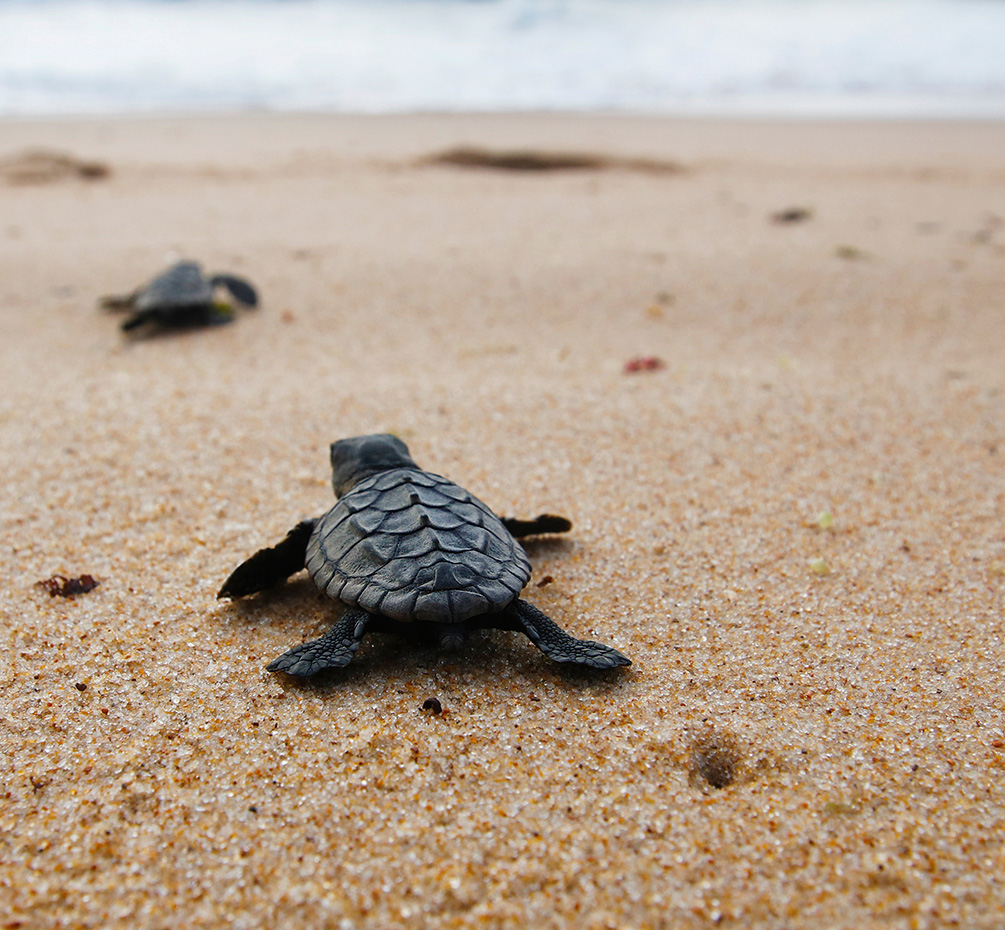
As a result of studies conducted with universities, a rich flora and fauna inventory of Belek was compiled, and the “Belek 2000” project consisting of 52 sub-projects was prepared. In the region, 574 plant species (29 endemic, including the Serik pear found only in Belek) and more than 120 bird species have been identified. Additionally, Belek beaches are important nesting areas for Caretta caretta sea turtles.

BETUYAB has supported nature conservation and promotion efforts through protection projects launched in 1999 and eco-guide books. These projects have received international awards, including second place in Europe at the British Airways Tourism for Tomorrow Awards and first place from the United Nations. Belek beaches have Blue Flag status and are recognized as a model for environmental initiatives.

01/05
betuyab-biocesitlilik-gorsel.jpg

Forest Fire Response and Radio Communication Network

As part of wildfire response efforts, fire hydrants were installed within forest areas, equipment and pumps were strengthened, and a response vehicle along with an emergency radio communication system was put into operation in 1996. The forest perimeter was secured with wire fencing, and between 1997 and 2005, 70 fires were responded to, preventing major risks.

BETUYAB also established a fire base in Belek that includes a heliport and social facilities, and in 2007 contributed to regional firefighting efforts by constructing two fire water reservoirs for use across Antalya.

01/05
betuyab-ormanyangisi-gorsel.jpg

Existing Infrastructure

Drinking Water

icme-suyu.svg

The drinking water source of the region is the Boztepe TİGEM farm. A total of 8 wells provide 667 liters per second of very high-quality drinking water, which is pumped into 5 drinking water reservoirs in the region, each with a capacity of 3,000 tons.

Wastewater Treatment Facilities

artima-tesisleri.svg

The first treatment plant in the region has a capacity equivalent to 65,500 people, while the second treatment plant has a capacity equivalent to 115,000 people. The wastewater of the two municipalities in the region (Belek and Kadriye municipalities) is connected to these treatment facilities.

Security Camera System

guvenlikkamera.svg

The Security Camera System in our region, implemented in 2009 by the Special Provincial Administration with the infrastructure contribution fees of our partners, served for a long time at the Belek Gendarmerie Station. However, due to issues such as malfunctions and maintenance, it could not operate regularly. Within the scope of investments made prior to the G20 Leaders’ Summit, a shared MOBESE surveillance infrastructure was established in cooperation with the province of Antalya.

Roads

yol-icon.svg

The roads in the region have a total length of 45.5 km and were initially constructed with a surface coating. Later, between 2003 and 2004, all internal and external roads were covered with hot asphalt, and in 2006 transportation roads and approximately 19 km of sidewalks were completed. In 2013, a 6.4 km divided road was built from Kadriye to Belek, and in 2015, ahead of the G20 summit, drainage, road, and sidewalk renewal works covering 6.5 km along the main route were carried out.

Electrification

electric-icon.svg

The region’s energy investment was carried out by Kepez Inc., with the cost shared as one-third by the Ministry of Tourism of the Republic of Türkiye, one-third by Kepez Inc., and one-third by BETUYAB. This project provided the energy needs of the facilities as well as road lighting. The installed capacity of the region is 200,000 kW/h.

In 2006, a project was prepared to underground all electrical lines in the region. After approval from TEDAŞ, the first phase of overhead lines in a part of the region was converted to underground cables in 2006. In 2015, prior to the G20 Summit, undergrounding works were carried out in the Üçkumtepesi and İskele areas only on branch roads, while the three main lines supplying the region were connected through underground cabling.

Telecommunications

telekom-icon.svg

The initial telecommunications investment, consisting of copper cable and fiber optic communication lines and switching buildings, was carried out by PTT, with one-third of the cost covered by PTT, one-third by the Ministry of Tourism of the Republic of Türkiye, and one-third by BETUYAB. This system provided each facility with a capacity of 25 telephone lines. In the following years, through cooperation with Türk Telekomünikasyon A.Ş., fiber optic lines were extended up to hotel entrances in exchange for service procurement. In 2015, ahead of the G20 Leaders’ Summit, Türk Telekom strengthened its entire infrastructure, and other telecommunications companies also established their own fiber optic networks in the region.